

Prof. WANG Guozhen, an outstanding mathematician from Fudan University, has won the 2026 Tan Kah Kee Young Scientist Award in Mathematics and Physics for his research on “Computations of Stable Homotopy Groups of Spheres and the Classification of Smooth Structures.” WANG and his collaborators calculated the first 90 stems of the stable homotopy group of spheres, and established the deformation idea in homotopy theory. In particular, they proved that there is a unique differential structure on the 61-dimensional sphere, which is the last unknown case of the smooth generalized Poincaré conjecture in odd dimensions.
What are “stable homotopy groups of spheres”? Why do mathematicians pursue such issues? It is a long pursuit in topology that can be traced back to some prominent names in mathematics—for example, Euler.
Topology: Geometria Situs
The notion of topology is very ancient. In 1679, Leibniz has outlined a blueprint in his letters of a theory of “Geometria Situs”, or Geometry of Positions, which can deal with relative positions and adjacency directly as algebra.
One such an example is the famous Euler’s formula for convex polytopes. Proposed in 1750, It says that, for any convex polytope, the number of vertices, V, the number of edges, E, and the number of faces, F, satisfy the following relation: V−E+F=2.
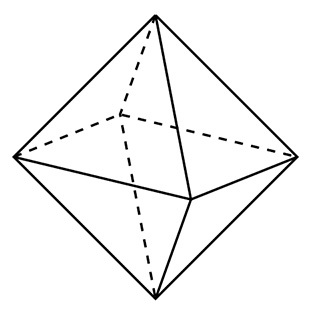
The Octahedron has V=6, E=12, F=8 (Image by WANG Guozhen)
This theorem does not depend on the details of the geometry of the polytope, but concerns on the relative positions of its vertices. Euler did not give a mathematically rigorous proof of the formula. This was achieved later by Legendre in 1794 using geometric methods.
A fully “Geometria Situs” type proof came much later.
In his famous paper “Analysis Situs” (1895) and its five supplements (1899–1904), Poincaré established modern notions of topology. He introduced the preliminary notions of “homology”. Roughly speaking, homology denotes the number of “holes” in a space. Poincaré finds an algorithm to compute these numbers provided a space is decomposed into a collection of simple components, which is called a triangulation in modern terms. In particular, for a polyhedron, we have one 0-dimensional “hole” by convention, no 1-dimensional holes, and one 2-dimensional hole–the hole bounded by the polyhedron. Then Euler’s formula can be stated as: V−E+F equals the number of even dimensional holes minus odd dimensional holes.
This latter formula can be generalized. For any space, if we can decompose it into “cells”, then we always have the formula: the number of even dimensional cells minus the number of odd dimensional cells equals the number of even dimensional holes minus number of odd dimensional holes.
The right-hand side of the formula is a topological invariant of the underlying space, independent of its geometric details as well as its triangulation. Because it is proposed by Euler, this number is named the Euler number.
Geometry and Euler Number
The Euler number is a very useful invariant. In dimension 2, it is intimately connected with geometry.
An illustrating example is the wind field on the Earth. On each position there is a direction of wind. If we suppose that direction changes continuously with the position, then there should always be somewhere on the Earth that is windless. In mathematical terms, the association of each point with a direction and a length is called a vector field. The Poincaré-Hopf theorem (Poincaré, 1885; Hopf, 1926) says that, for continuous vector fields, the number of its zeros is always equal to its Euler number, if we count multiplicity correctly. For the sphere, its Euler number is 2, so on the Earth, there should always exist at least 2 windless places, or a “double” windless place.
On the other hand, on a torus, whose Euler number is zero, there could exist vector fields without zeros: imagine a torus shaped world where the wind blows circularly.
The Euler number also controls the curvature of the surface. The curvature is a quantity that measures how hard it is to straighten it. The famous Gauss-Bonnet theorem (Gauss, 1827; Bonnet, 1848) says that the totality of the curvature through the surface, i.e. the integral, is proportional to its Euler number. This theorem is generalized to higher dimensions by Chern (1944). So the Euler number is an obstruction to the flatness of the space. Whenever the Euler number is non-zero, when you straighten it locally, it inevitably introduces curvature at other places, so that the totality of the curvature is preserved.
The Classification of Surfaces
The classification of surfaces was achieved in the latter half of the 19th century (Mobius, 1883; Jordan, 1866; Dehn-Heegaard, 1907).
For oriented surfaces, i.e. those surfaces which can be painted red on one side and blue on the other side, it turns out that the Euler number is the only topological invariant, which can take the values 2, 0, −2, −4, .... For example, the sphere has Euler number 2, the torus 0, the double torus −1. The surface obtained from the sphere by digging g holes has Euler number 2-2g, and any oriented surface can be identified with one of them.
Classification of Higher Dimensional Spaces
With the success in dimension 2, we would like to ask the question in higher dimensions. It is hard to conceive 3-dimensional spaces with non-trivial topology, partly because we observe the world with light-rays which forms a “screen” of 2 dimensions. We can regard the 3-dimensional sphere as the one-point compactification of the 3-dimensional Euclidean space: just think of all “far away points” to be regarded as one point—the point at infinity.
Unlike the case of surfaces, the classification of 3-dimensional spaces is significantly more complicated. We are mainly concerned with manifolds, i.e. those spaces which locally look like Euclidean spaces, usually with the assumption of compactness and/or suitable boundaries. While the Euler number of 3-dimensional manifolds (3-manifolds) always vanishes, we have another powerful invariant: the fundamental group. That group is defined to be the equivalent classes of closed paths from a fixed point, where we regard two paths equivalent if they can be continuously deformed into each other. How much the fundamental group differentiates 3-manifilds is a subtle question. The Poincaré conjecture asks if a closed 3-manifold with trivial fundamental group is necessarily a 3-dimensional sphere. This was solved by Pereleman, after more than a century since it was posed.
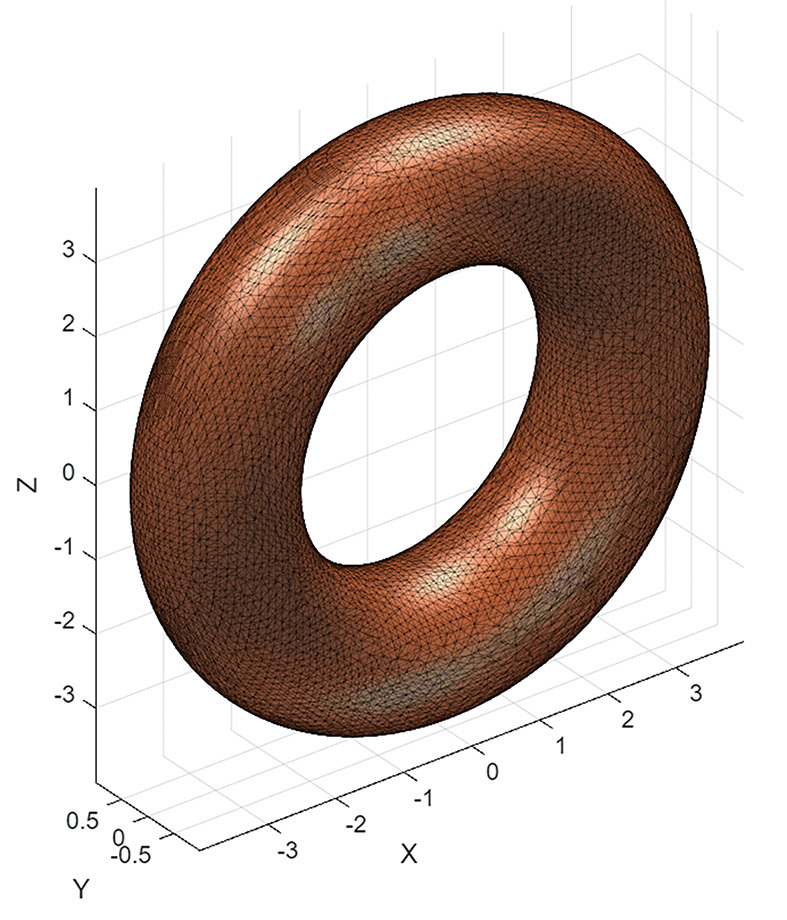
The torus. It has two 1-dimensional “holes”: one around the vertical loop, the other around the “handle”. Together with a “0-hole” by convension, and the 2-dimensional “hole” inclosed by the surface, we find it Euler number to be 0. It is the unique oriented closed surface with Euler number 0. (Image by WANG Guozhen)
In general, we would like to have the classification of even higher dimensional manifolds. The success in low dimensional case suggests that we should look at those invariants which are preserved by continuous demonstrations, which are called homotopy invariants. Homotopy is the theory studying these invariants. By constructing the homotopy category of spaces, we have a universal theory encompassing all these invariants, which in some sense realizes Leibniz’s dreams. An isomorphism class in the homotopy category is called a homotopy type, which includes all spaces which have the same value of all homotopy invariants.
Does the homotopy type determine the manifold? While this is true in dimension 2, it is false in general. The classification of manifolds with a fixed homotopy type can be studied using the method of surgery. Using surgery theory, we can reduce the classification of manifolds in dimension at least 5 into computations of algebraic invariants such as stable homotopy groups and algebraic K theory. The classification of 4-dimensional manifolds is subtler, and one of the key pieces of the puzzle—the classification inside h-cobordism classes—is still missing.
The Generalized Poincaré Conjecture
One of the basic cases in classification of higher manifolds is the homotopy spheres, which is referred to as the generalized Poincaré conjecture: Are closed manifolds with homotopy type of a sphere unique up to equivalence, and if not, how to classify them? The Poincaré conjecture is the case in dimensional 3.
The problem also depends on whether we require smooth structures on the manifolds, i.e. if we require the equivalences are defined by differentiable functions. In dimension at most 3, it is shown by Moise that there is a unique smooth structure, so the smooth classification is the same as the topological one. However, beginning in dimension 4, it is very common that inequivalent smooth structures exist on the same topological space.
The topological case of the generalized Poincaré conjecture is demonstrated true thanks to works of Smale, Freedman and Pereleman. So a homotopy sphere is necessarily a topological sphere. The smooth case is subtler. Milnor showed that the 7-dimensional sphere has non-standard smooth structures, so that the 7-dimensional smooth Poincaré conjecture is false. Later Kervaire-Milnor developed surgery theory and reduced the smooth classification of homotopy spheres in dimension at least 5 into the following three problems: the image of J, the Kervaire invariant, and the computations of stable homotopy groups.
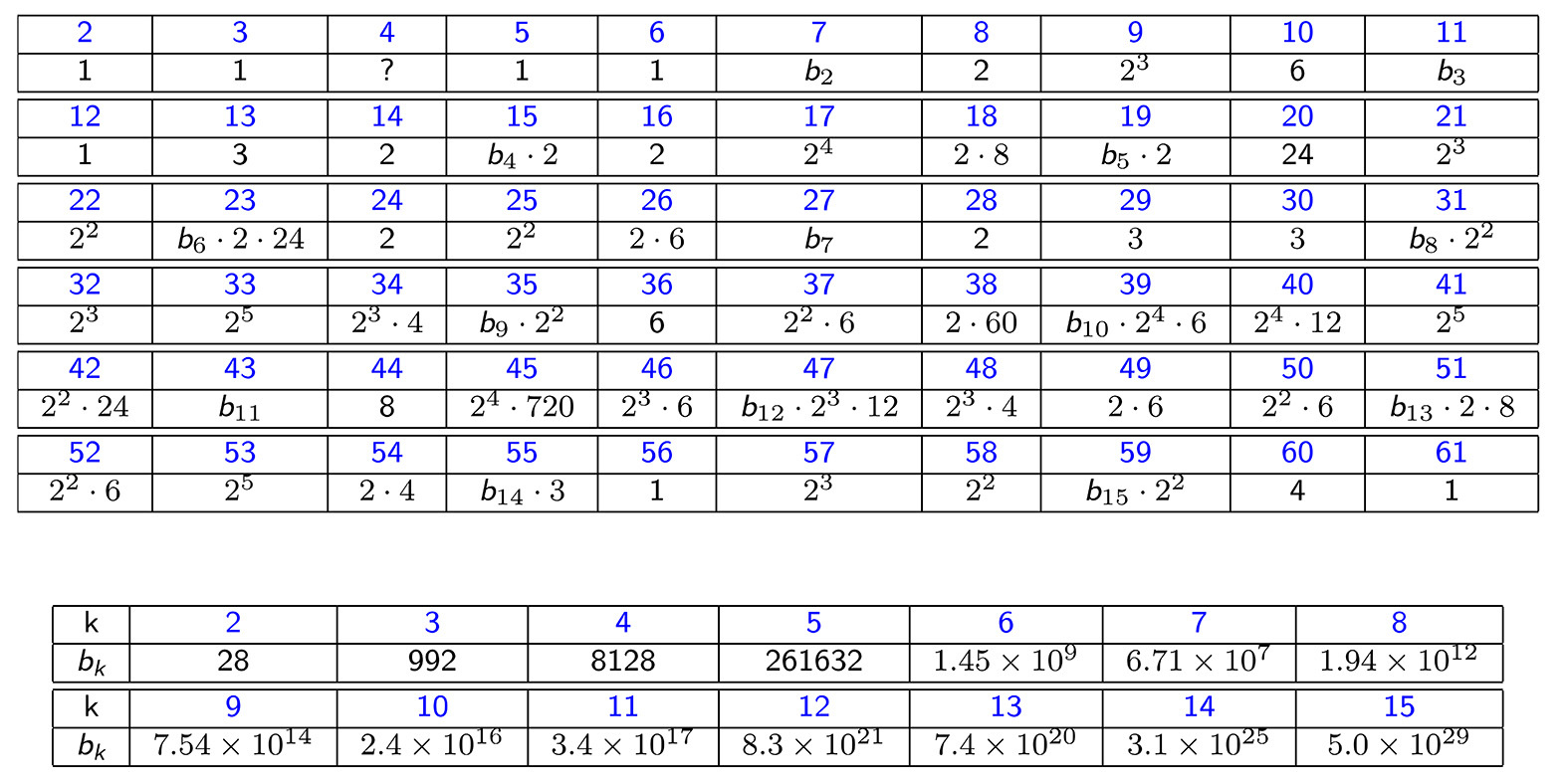
The number of smooth structures on spheres. The blue numbers indicate the dimension, and the black ones the number of smooth structures.
The first problem was solved by Adams, Quillen and Sullivan, which completely determined the structure of image of J. The second problem is reduced to the computation of an Adams differential by Browder, and the latter is solved by Barratt-Mahowald-Tangora, Barratt-Jones-Mahowald, Hill-Hopkins-Ravenel and Lin-Wang-Xu.
The full computation of the stable homotopy groups of the spheres is still far from complete. Before the 2000’s, only the first 45 stems of them were computed. Isaksen extended the computation to the first 59 stems using motivic Adams spectral sequence. Wang and Xu (2017) solved the cases of the 60th and 61st stems by investigating the stable homotopy of the real projective spaces. Later, Isaksen, Wang and Xu (2020, 2023) extended the computations to stem 90 using motivic deformation techniques developed by Gheorghe, Wang and Xu (2021).
Using these computations, we can now classify homotopy spheres up to smooth equivalence up to dimension 90 except dimension 4 (Isaksen, Wang and Xu, 2023). In particular, we know that the smooth case of the Poincaré conjecture is true in dimensions 1, 2, 3, 5, 6, 12, 56, 61. In all the other odd dimensions, there always exist exotic smooth structures, so that the smooth Poincaré conjecture is false. While the 4-dimensional case is still wild open, we expect the other even dimensional case of the smooth Poincaré conjecture is false. The latter was checked by Behrens, Hill, Hopkins and Mahowald (2020) up to dimension 140.
Reference
Bonnet, O. (1848). Mémoire sur la théorie générale des surfaces [Memoir on the general theory of surfaces]. Journal de l’École Polytechnique, Cahier 32, 1–146.
Behrens, M., Hill, M., Hopkins, M. J., & Mahowald, M. (2020). Detecting exotic spheres in low dimensions using coker J. Journal of the London Mathematical Society, 101(3), 1173–1218. https://doi.org/10.1112/jlms
Chern, S.-S. (1944). A simple intrinsic proof of the Gauss-Bonnet formula for closed Riemannian manifolds. Annals of Mathematics, 45(2), 747–752. https://doi.org/10.2307/1969302
Dehn, M., & Heegaard, P. (1907). Analysis situs. In Enzyklopädie der mathematischen Wissenschaften (Vol. III AB 3, pp. 153–220).
Gauss, C. F. (1828). Disquisitiones generales circa superficies curvas [General investigations of curved surfaces]. Commentationes societatis regiae scientiarum Gottingensis recentiores, Tomus VI, 99–146.
Gheorghe, Bogdan; Wang, Guozhen; Xu, Zhouli. (2021) The special fiber of the motivic deformation of the stable homotopy category is algebraic, Acta Math. 226, no. 2, 31 9–407.
Hopf, H. (1926). Vektorfelder in n-dimensionalen Mannigfaltigkeiten. Mathematische Annalen, 96, 225–250.
Isaksen, Daniel C.; Wang, Guozhen; Xu, Zhouli. (2020) Stable homotopy groups of spheres, Proc. Natl. Acad. Sci. USA 117, no. 40, 24757–24763.
Isaksen, Daniel C.; Wang, Guozhen; Xu, Zhouli. (2023) Stable homotopy groups of spheres: from dimension 0 to 90, Publ. Math. Inst. Hautes Etudes Sci., 137, 107–243.
Jordan, C. (1866). Sur la déformation des surfaces. Journal de mathématiques pures et appliquées, 2e série, 11, 105–109.
Möbius, A. F. (1863). Theorie der elementaren Verwandtschaften. Berichte über die Verhandlungen der Königl. Sächsischen Gesellschaft der Wissenschaften zu Leipzig, Mathematisch-Physische Klasse, 15, 18–57.
Poincaré, H. (1885). Sur les courbes définies par une équation différentielle (troisième partie). Journal de mathématiques pures et appliquées, Série 2, 1
Poincaré, H. (1895). Analysis Situs. Journal de l’École Polytechnique, Série 2, Cahier 1, 1–123.
Poincaré, H. (1899). Complément à l’Analysis Situs. Rendiconti del Circolo Matematico di Palermo, 13, 285–343.
Poincaré, H. (1900). Second complément à l’Analysis Situs. Proceedings of the London Mathematical Society, 32, 277–308.
Poincaré, H. (1902). Troisième complément à l’Analysis Situs. Bulletin de la Société Mathématique de France, 30, 49–70.
Poincaré, H. (1902). Quatrième complément à l’Analysis Situs. Journal de Mathématiques Pures et Appliquées, 8, 169–214.
Poincaré, H. (1904). Cinquième complément à l’Analysis Situs. Rendiconti del Circolo Matematico di Palermo, 18, 45–110. doi:10.1007/BF03014091
Wang, Guozhen; Xu, Zhouli. (2017) The triviality of the 61-stem in the stable homotopy groups of spheres, Ann. of Math. (2) 186, no. 2, 501–580.