

Top 10 News for S&T Advances of China for the Year 2025
01. China’s “Artificial Sun” Sets New Record with 100-million-degree Plasma Sustaining over 1,000 Seconds
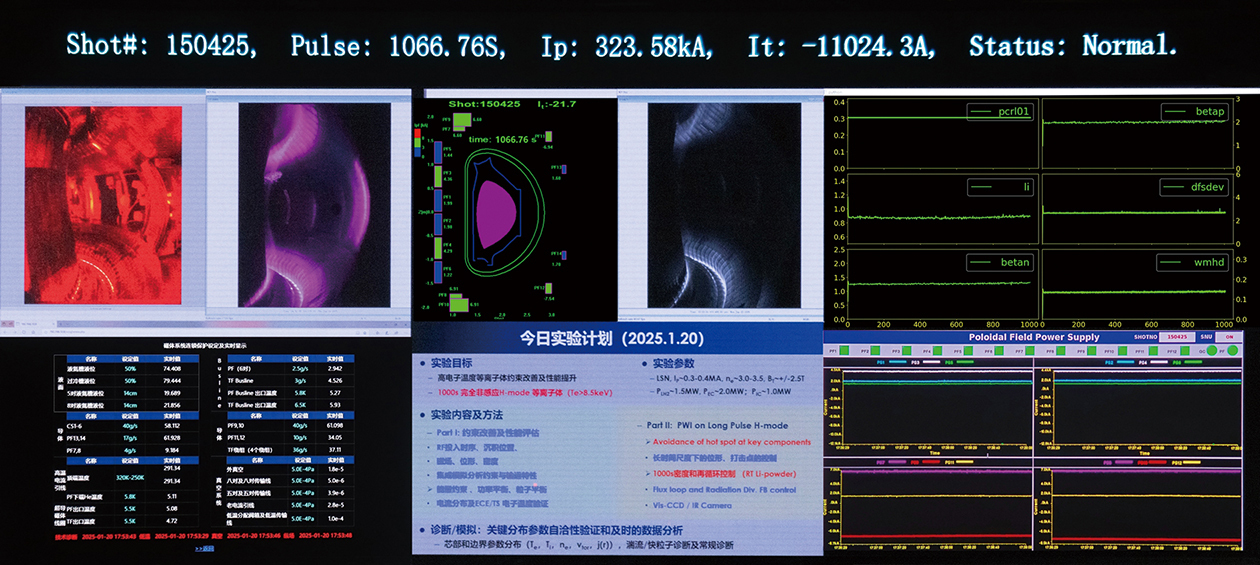
A snapshot from the experiment: The moment marking 1,066 seconds of steady running of the high-confinement plasma at 100 million degrees Celsius. (Credit: ASIPP)
On January 20, 2025, a team working on the Experimental Advanced Superconducting Tokamak (EAST)—also known as China’s “Artificial Sun,” set a new world record with its success in steadily operating a high-confinement plasma of 100-million degree Celsius for 1,066 seconds. This “high-quality combustion” marks a significant milestone for controlled nuclear fusion: Signaling a turning point from fundamental research to engineering practice, it sends human beings one more step closer to fusion power generation.
Located at the Institute of Plasma Physics (ASIPP), Hefei Institutes of Physical Science, Chinese Academy of Sciences in Hefei, Anhui Province of China, EAST marks the first fully superconducting tokamak in the world. To tame the extremely hot plasma needed to ignite a nuclear fusion, it uses extremely strong magnetic fields to lock the particles within a limited space, and avoid touching on the container wall. This requires the integration of five extreme conditions into one: ultra-high temperature, ultra-low temperature, ultra-high vacuum, ultra-strong magnetic field, and super-large current. A total of nearly one million components, supported with nearly 2,000 self-owned patents, work in synergy toward the goal of fusion power generation. Since its launch in 2006, this highly complicated device has operated over 150,000 shots of plasma in its experiments.
02. DeepSeek Charts a Different Course
On January 20, 2025, a seismic shift hit the global artificial intelligence community when DeepSeek, a Chinese startup established just over a year before, unveiled its latest model, DeepSeek-R1. The release has triggered, as Silicon Valley investor Marc Andreessen called it, an “AI Sputnik moment,” ushering in a new era where Chinese tech is actively challenging U.S. giants.
Published in Nature (doi: 10.1038/s41586-025-09422-z) in 2025, a report on R1 has stunned the industry by delivering reasoning capabilities—such as mathematics and coding—that are comparable to OpenAI’s o1 model. What makes this achievement particularly disruptive is its efficiency: While U.S. tech firms typically spend tens of millions of dollars to train similar models, the total training cost for R1 was approximately $294,000. This ultra-low cost, combined with a fully open-source architecture, led experts to view this as a turning point.
“DeepSeek-R1 is a major breakthrough... It not only challenges OpenAI’s leading position but also injects new vitality into AI technical development,” says Dr. ZHANG Yongdong, Chief Scientist at the State Key Laboratory of Communication Content Cognition and a professor of the University of Science and Technology of China (USTC). By proving that elite performance does not necessarily require exorbitant budgets, DeepSeek implies that China has moved from imitating Western AI to potentially surpassing it.

In early 2025, Chinese startup DeepSeek made waves with the release of R1, a low-cost, high-performance model. (Graphic: DeepSeek, Inc.)
03. First Experimental Thorium Molten Salt Reactor Marks New Breakthrough in Future Advanced Nuclear Technology of China

The reactor core being installed. (Photo: SIAP)
The Chinese Academy of Sciences (CAS) announced on November 1, 2025 that the thorium in the fuel of the 2MWT thorium molten salt reactor (TMSR) in Wuwei, Gansu Province of China was successfully converted to uranium. Powered with technologies developed by the Shanghai Institute of Applied Physics (SINAP) under CAS, this experimental reactor is the only TMSR in operation nowadays. Its success in fuel conversion marks the first successful collection of experiment data in an operating TMSR, demonstrating the utilization of thorium resources in TMSR is technically feasible.
TMSR is a fourth-generation advanced nuclear energy system internationally acknowledged as an optimal way to utilize thorium resources. Using fluorides as a recycle coolant, it features high safety as well as high efficiency.
CAS set a priority program in 2011 to support the research and development of TMSR-related technologies, aiming to support this future advanced nuclear system with core technologies and provide feasible solutions for scale-up industrial utilization of thorium resources. The success of the experimental TMSR laid a solid foundation for the future development and ensuing construction of research reactors and demonstrative reactors.
04. Liver Cancer Prognosis System Globally Accessible
Hepatocellular carcinoma (HCC) remains one of the deadliest cancers globally, with nearly 70% of its patients suffering from recurrence after surgery. Traditional staging systems focused on tumor size and spread but overlooked the critical immune landscape within tumors. Dr. SUN Cheng and collaborators from the University of Science and Technology of China under CAS developed the TIMES system, an AI-powered platform decoding spatial immune architecture to predict cancer recurrence. Published as a cover story in Nature (doi: 10.1038/s41586-025-08668-x), this work represents a breakthrough in precision oncology.
Using multiplex immunofluorescence imaging, the team discovered that spatial relationships between immune cells matter more than cell counts alone. The team created a freely accessible online platform (https://sun.times.ustc.edu.cn), enabling clinicians worldwide to upload standard pathology slides and receive risk assessments within minutes—no specialized equipment required. Since launch, the platform has served over 3,000 users across 45 countries, democratizing precision medicine in resource-limited settings.
This innovation exemplifies how spatial biology and AI can be translated into practical clinical tools, positioning China at the forefront of next-generation cancer diagnostics.
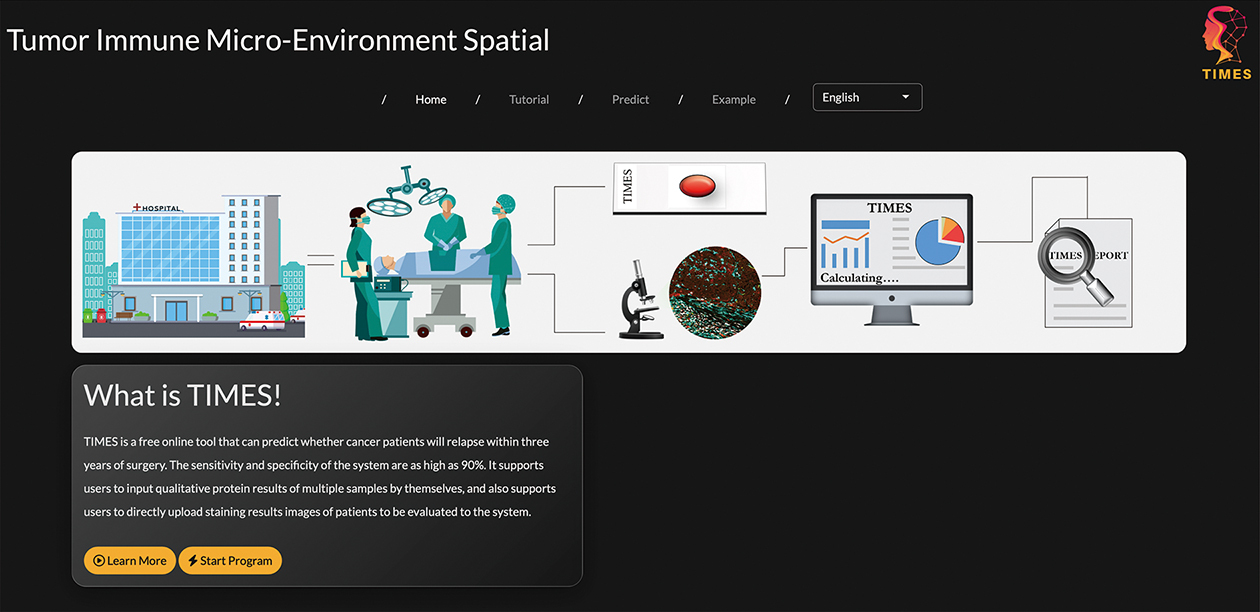
A Digital Clinical Assistant: The interface of the open-access TIMES tool, which allows clinicians to upload images and generate personalized recurrence risk reports. Access the platform at https://sun.times.ustc.edu.cn. (Graphic: USTC)
05. “Beinao-1” Completes Full Wireless Implantation
For patients silenced by amyotrophic lateral sclerosis (ALS) or paralysis, brain-computer interfaces (BCIs) offer a digital lifeline, yet the technology has long been limited to small-scale experiments. That is changing rapidly. As of December, 2025, a team led by the Chinese Institute for Brain Research, Beijing (CIBR) and NeuCyber Neurotech had implanted their “Beinao-1” (Neucyber Matrix BMI) system in six patients. The semi-invasive device, which captures signals from the brain’s surface without penetrating the tissue, allows users to wirelessly control robotic arms to pour water or translate intentions into screen text.
Driven by significant state support since CIBR’s founding in 2018, the project is scaling aggressively. Chief Scientist Dr. LUO Minmin has planned to expand the clinical trial up to 50–100 patients in 2026. Pushing the boundaries of precision, the team is also preparing “Beinao-2” for clinical validation this year. Unlike its predecessor, this invasive system utilizes flexible microelectrode arrays to capture large-scale neuronal firing for 3D spatial control. By integrating these neural signals with artificial intelligence, researchers aim to evolve the technology into “embodied intelligence,” fostering a true fusion of human and machine capabilities. This surge in innovation marks not just a competitive milestone in neurotechnology, but a hopeful new era for restoring dignity to those facing severe neurological barriers.
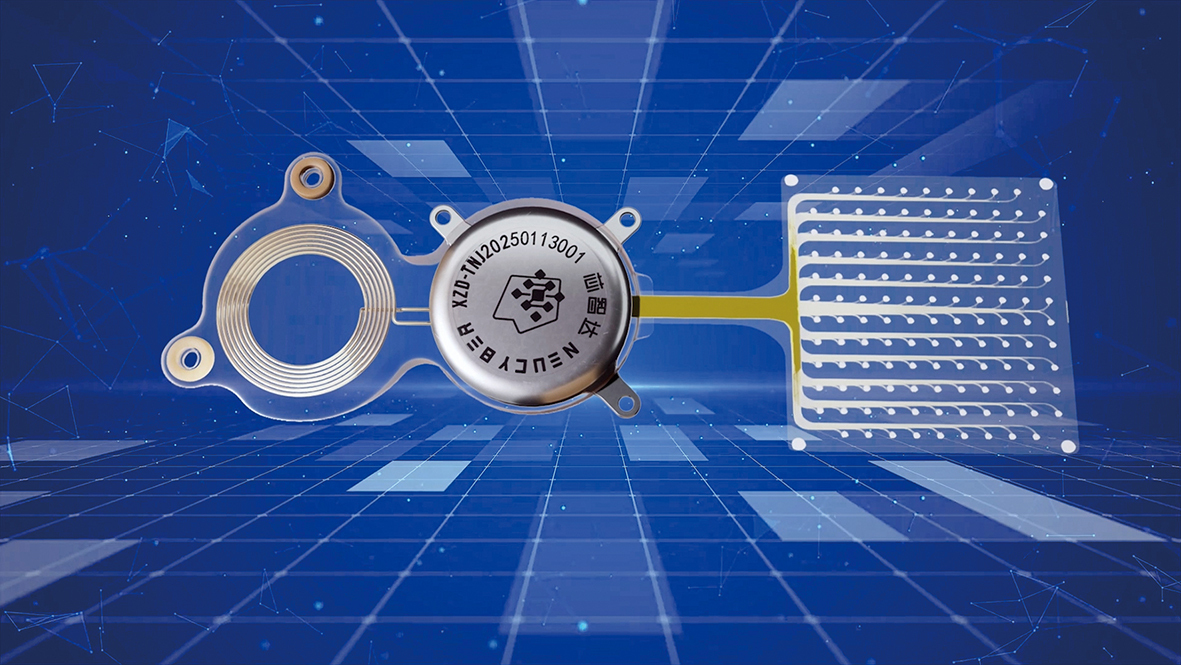
Product image of “Beinao-1”. (Graphic: CIBR)
06. Discovery of New Target & Drug Candidate for Parkinson’s
The relentless progression of Parkinson’s disease is driven by the transmission of toxic proteins across the brain—a process that gradually destroys motor and cognitive functions. Pathological α-synuclein fibrils spread between neurons in a prion-like manner, yet the specific receptors facilitating this invasion have long remained a mystery. A collaborative team from Fudan University and the Shanghai Institute of Organic Chemistry, Chinese Academy of Sciences identified FAM171A2 as a key neuronal receptor that mediates the uptake of these harmful fibrils.
Published in Science (doi: 10.1126/science.adp3645) on February 21, 2025, the study revealed that FAM171A2 interacts specifically with the C-terminus of α-synuclein fibrils through electrostatic forces. The researchers found that this receptor is overexpressed in the brains of Parkinson’s patients and shows a binding affinity for toxic fibrils that is 1,000 times stronger than for harmless protein monomers. In animal models of pathological α-synuclein propagation, a condition mimicking Parkinson’s disease, overexpressing FAM171A2 accelerated the spread of brain pathology—whereas knocking it down provided significant neuroprotection and preserved motor function.
To translate these findings into a potential treatment, the team used AI-driven virtual screening to identify bemcentinib—an existing drug—as an effective blocker of the FAM171A2–fibril interaction. Experiments in mice showed that bemcentinib reduces the internalization of toxic α-synuclein, offering a promising “proof of concept” for disease-modifying therapies. These findings provide a structural blueprint for developing new drugs that could finally slow or halt the progression of Parkinson’s disease.
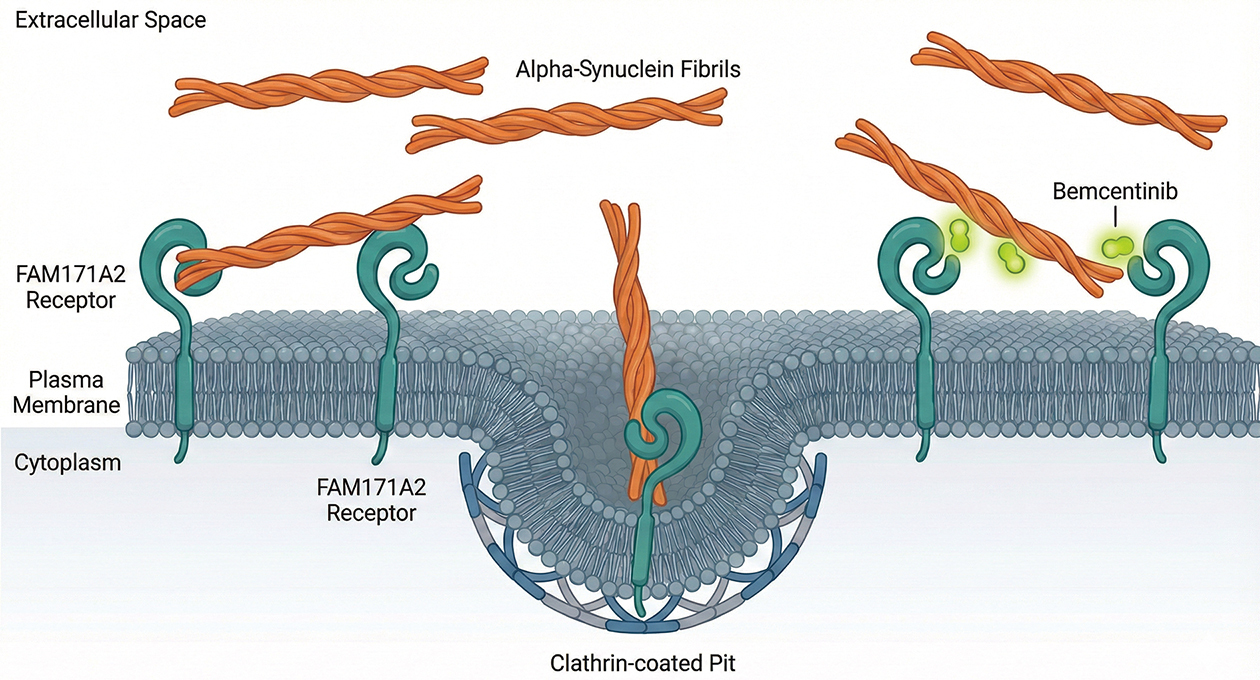
Locking out toxic proteins. Normally, harmful α-synuclein strands (orange) sneak into neuron cells through a “doorway” receptor called FAM171A2 (teal blue). Bemcentinib (glowing green) acts like a shield, blocking this doorway and preventing the toxic proteins from entering the cell. (Illustration generated with AI)
07. Emergence of Zuchongzhi-3, the Superconducting Quantum Computing Prototype
On March 3, 2025, a team led by Profs. PAN Jianwei, ZHU Xiaobo and PENG Chengzhi from the University of Science and Technology of China (USTC) under CAS reported in Physical Review Letters their successful construction of Zuchongzhi-3, a superconducting quantum computing prototype 1015 times faster than the most powerful classical supercomputer then available. One of the journal reviewers described it as “benchmarking a new superconducting quantum computer, which shows state-of-the-art performance” and a “significant upgrade from the previous 66-qubit device (Zuchongzhi-2).”
Featuring 105 qubits and 182 couplers, the performance of Zuchongzhi-3 is significantly enhanced compared with its predecessor Zuchongzhi-2.
To evaluate its capabilities, the team tested the system with an 83-qubit, 32-layer random circuit sampling task. The results demonstrated that Zuchongzhi-3 outpaced then the world’s most powerful classical supercomputer based on the best algorithms by 15 orders of magnitude. It was also one million times faster than the results published by Google in October 2024. This marked the most powerful quantum supremacy among worldwide counterpart systems at that time.
Now the team is actively advancing in quantum error correction, quantum entanglement, quantum simulation, and quantum chemistry.

The low-temperature testing system for Zuchongzhi-3, the superconducting quantum computer reported in March 2025. Integrating 105 qubits and 182 couplers, this prototype achieved the most powerful quantum supremacy at that time. (Image by USTC)
08. Dual Advances Propel Clean Hydrogen Production Technology
Hydrogen is central to future clean energy systems, yet its production faces two critical hurdles: the instability of efficient catalysts and the heavy carbon footprint of current methods. Two recent studies by Peking University (PKU) addressed these challenges through distinct, innovative pathways.
In the first study, published in Nature (doi: 10.1038/s41586-024-08483-w), a team led by Prof. MA Ding tackled the durability dilemma. High-performance catalysts often degrade rapidly because their reactive supports oxidize and collapse in water. To prevent this, the researchers developed a “shielding” strategy by depositing inert nano-overlays—specifically lanthanum oxide—onto a molybdenum nitride support. This protective coating blocked redundant surface sites where oxidation typically initiates, while leaving the active interfacial sites exposed for the chemical reaction. The resulting catalyst maintained its structure and high activity for over 1,000 hours of operation. It achieved a turnover number of 15.3 million hydrogen molecules per platinum atom, exceeding previous records by an order of magnitude.
While the first study secured the catalyst’s lifespan, the second focused on eliminating emissions.
In a parallel breakthrough reported in Science (doi: 10.1126/science.adt0682), the same team and their collaborators achieved hydrogen production with zero carbon dioxide emissions. Using a platinum-iridium catalyst supported on molybdenum carbide, they engineered a reaction path that activates water and ethanol but prevents the breakage of carbon-carbon bonds. Consequently, the carbon was not released as CO2 but retained to form acetic acid. This “hydrogen production—carbon preservation” process generates clean fuel while creating a high-value industrial byproduct, reducing carbon emissions by over 60 percent compared to traditional methods.
Together, these complementary breakthroughs address the critical bottlenecks of longevity and sustainability, paving the way for a robust and economically viable hydrogen economy.
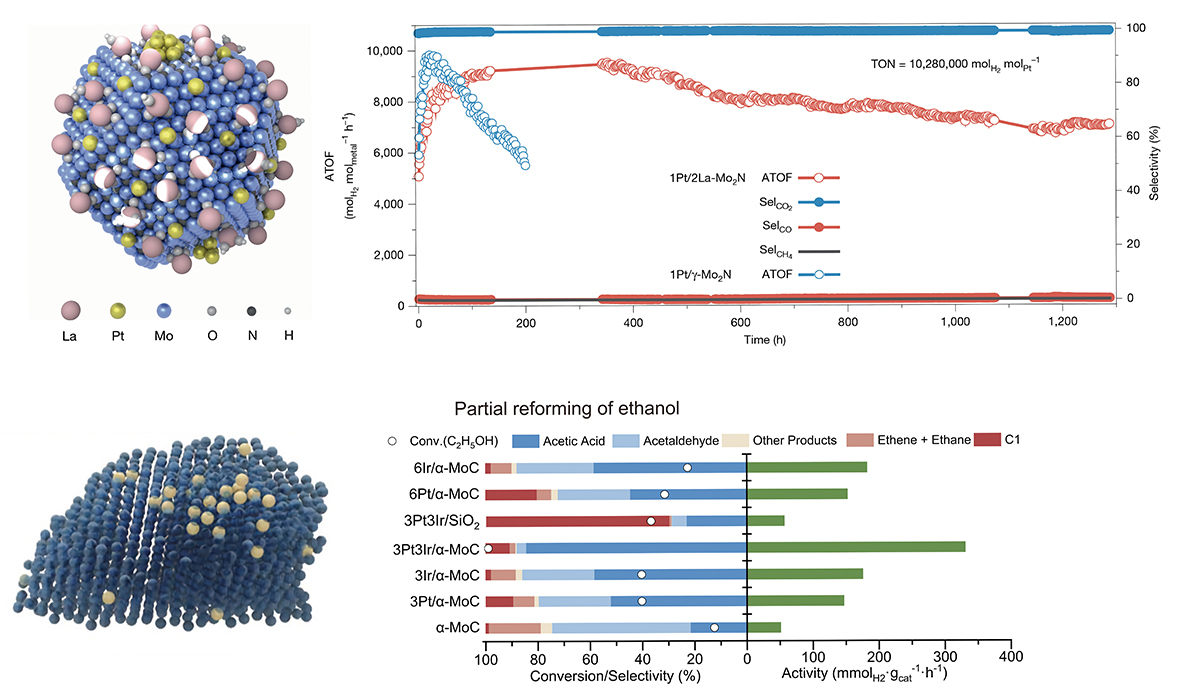
Two new paradigms for hydrogen production. Top: Lanthanum (La) nano-overlays shield the reactive support from oxidation, enabling the catalyst to maintain its structure and high activity for over 1,000 hours of operation. Bottom: A platinum-iridium catalyst supported on molybdenum carbide facilitates hydrogen production with zero CO2 emissions, reducing the carbon footprint by over 60% while generating high-value acetic acid as a byproduct. (Graphic: Peking University)
09. “Black Soil Granary” Initiative Achieves Breakthrough
Northeast China hosts one of the world’s four major black soil regions, yet unsustainable land use has driven severe degradation that threatens food security. To address this, the “Black Soil Granary” science and technology initiative convened its 2025 annual meeting on April 9 in Harbin, revealing major breakthroughs. Led by the Northeast Institute of Geography and Agroecology (IGA), Chinese Academy of Sciences, the initiative gathered over 1,300 researchers from 90 institutions to establish a sky-ground integrated monitoring system and complete the nation’s first 10-meter resolution remote sensing mapping of soil carbon and nitrogen. The team innovated a degradation control theory centered on enhancing the “inherent soil fertility” and developed comprehensive technologies for slope and gully erosion control. Beyond soil conservation, they utilized solid-phase breeding chips to cultivate the “Dongsheng 22” soybean—now ranking among the top ten nationally in promotion area—with the wider “Dongsheng” series covering over 13 million mu (866,667 hectares). The project also launched the “Honghu” series of intelligent machinery, which breaks foreign technical monopolies, and the “Fuxi” smart agriculture management system—a cascade machine learning system for 15-day global weather forecast.
The innovations have been crystallized into replicable frameworks—such as the “Longjiang Model” and “Sanjiang Model”—tailored to specific regional conditions (doi: 10.1051/bcas/2025007). The “Longjiang Model” targets the medium and thick black soil regions facing compaction and organic decline; by deeply incorporating crushed straw to construct a fertile plow layer, it has increased plow depth by 15 cm and crop yields by over 10%. Meanwhile, the “Sanjiang Model” addresses the constraints of albic soil (white clay) and sloping farmland through subsoil mixing and intelligent erosion monitoring, successfully reducing soil and water loss by over 70%. These innovations support the national strategy of sustainable resource utilization and ensure the long-term productivity of the region.

Secure the granary, secure the bowl: This field serves as a demonstration zone for the “Black Soil Granary” science and technology initiative, a massive scientific initiative led by the Chinese Academy of Sciences. By deploying advanced technologies—from satellite monitoring and AI-driven machinery to degradation control centered on enhancing the “inherent soil fertility”—researchers are working to reverse soil degradation and ensure this critical region continues to feed the nation. (Graphic: IGA)
10. On-chip Photonics Enables Full-Spectrum Wireless for 6G
Future wireless networks demand dynamic access to full spectrum resources to support data-intensive applications like extended reality and remote surgery. However, traditional electronic hardware is limited by single-band operation and cannot seamlessly adapt to different frequencies without bulky, complex equipment. As reported in Nature (doi: 10.1038/s41586-025-09451-8) on August 27, 2025, a research team led by Profs. WANG Xingjun and SHU Haowen from Peking University (PKU) and Prof. WANG Cheng from the City University of Hong Kong has now developed a universal integrated photonic chip to solve this challenge.
The researchers fabricated an ultrabroadband chip based on thin-film lithium niobate that integrates the entire wireless signal processing function into a tiny footprint. Unlike conventional electronic schemes that suffer from noise accumulation, this new architecture utilizes an integrated optoelectronic oscillator. It achieves precise frequency locking via a high-precision micro-ring resonator, allowing the system to cover a frequency range from 0.5 GHz to 115 GHz—spanning nearly eight octaves. Experiments showed the system supports wireless transmission rates exceeding 120 Gbps, meeting the peak requirements for next-generation 6G communication. This reconfigurable hardware ensures reliable connections even in complex environments and paves the way for AI-native networks that can simultaneously handle data transmission and environmental sensing.
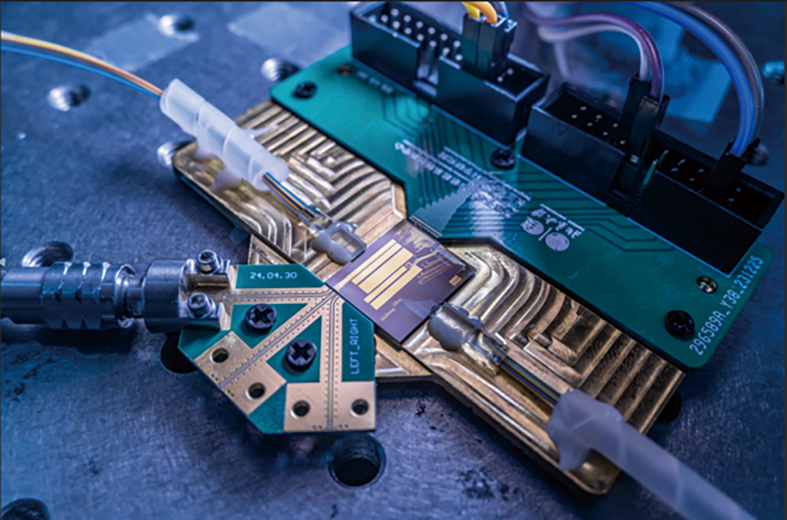
The prototype of a ultrabroadband integrated photonic chip. (Graphic: PKU)